

SAVING THE
GRASSLANDS
OF ASO
People's Livelihoods
and the Thousand-Year Grasslands
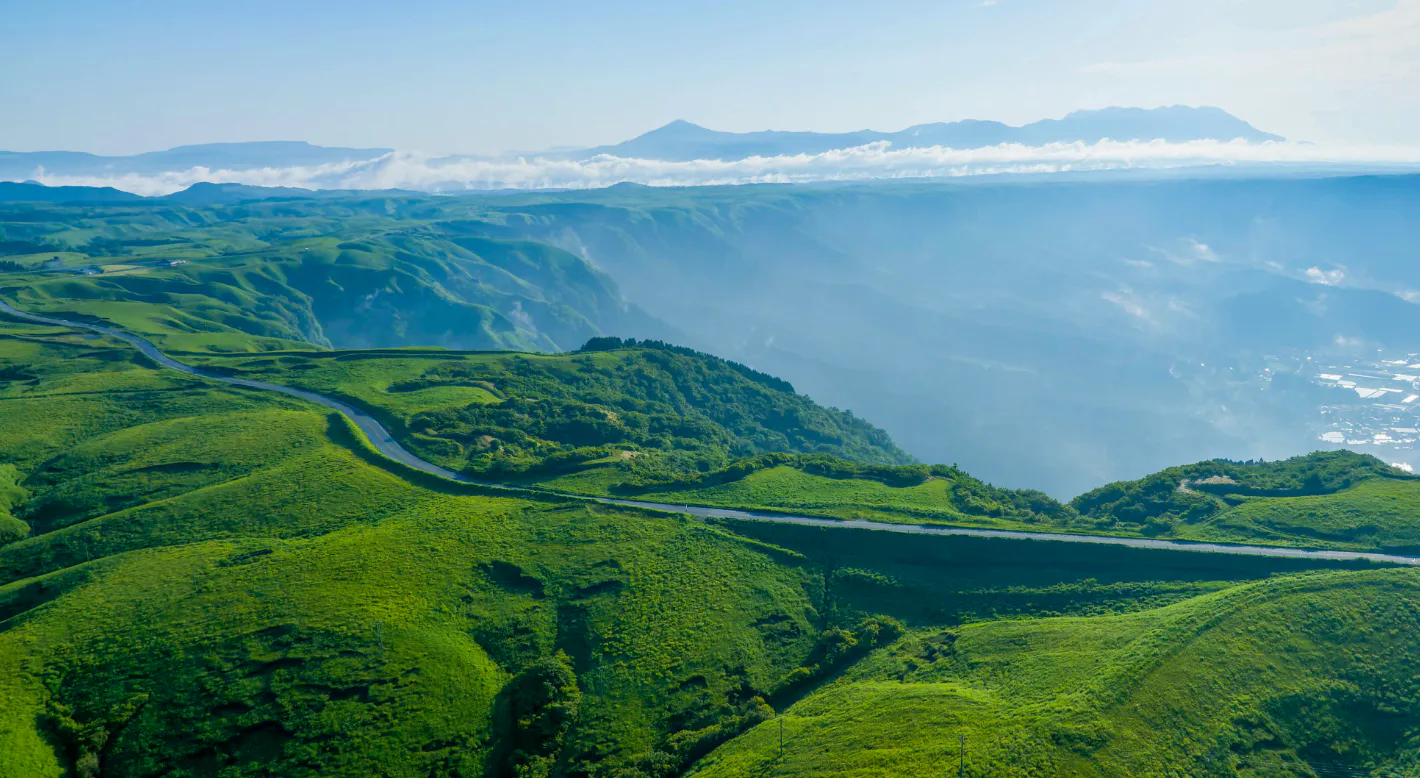
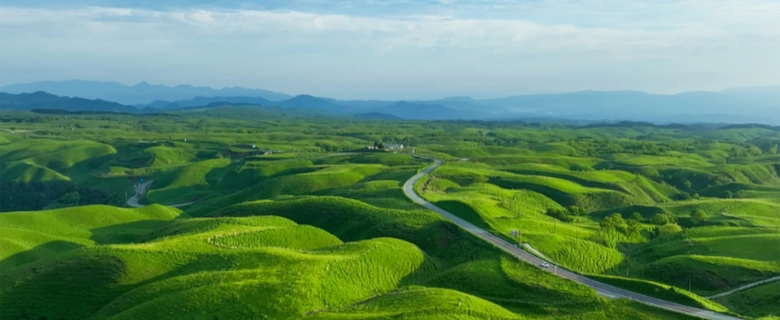
The grasslands of Aso spread across a volcanic plateau created by the massive eruptions of Mt. Aso in the distant past, and have been maintained by human activity that has continued uninterrupted for more than a thousand years. The landscape of Aso’s grasslands can be said to be proof of the long-lasting connection between people and nature.
Maintained by Human Hands, Generation after Generation
The Vast and Beautiful Grasslands of Aso
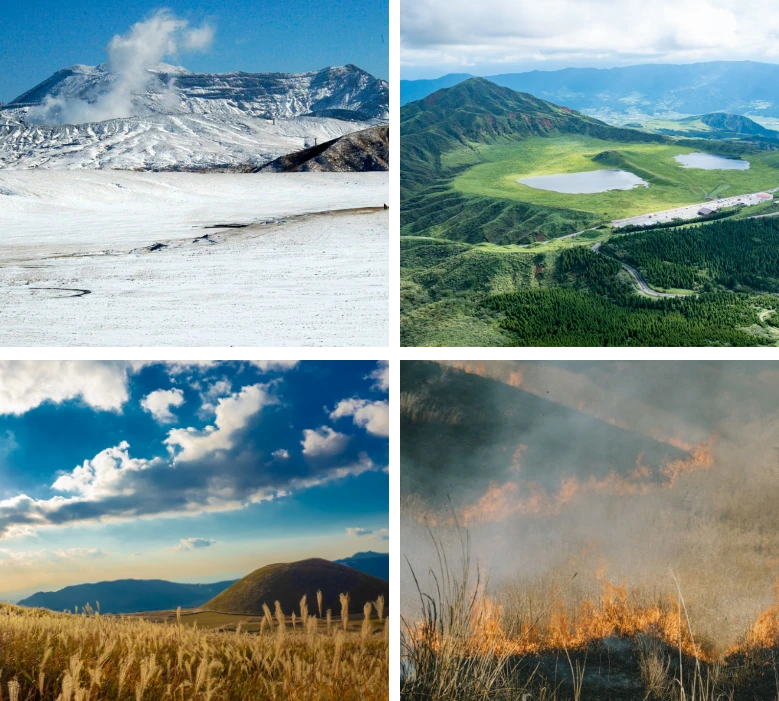
The scenery of Aso is remarkably diverse. It features mountains with rugged, exposed rock faces, as well as plains offering expansive views and gently rolling hills. These landscapes were formed by eruptions of Mt. Aso that occurred between approximately 270,000 and 90,000 years ago, creating the Aso Caldera, a vast depression shaped like the bottom of a pot.
How the Caldera Was Formed
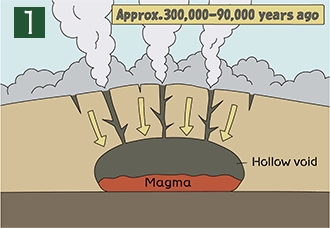
Repeated Massive Eruptions
Enormous volumes of magma erupted from a massive underground magma chamber, creating a vast hollow space beneath the surface.
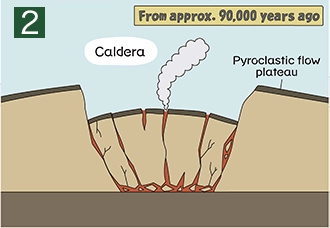
The surface collapses, forming the caldera
Unable to bear the weight above, the surface collapsed, giving birth to a giant depression: the “caldera.”
Rainwater accumulates in the caldera, forming a lake
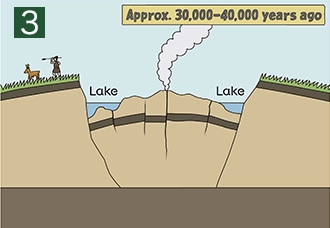
Rainwater collected in the depression forming a vast lake. On the outer rim mountains surrounding the lake, people lived by hunting (encircle-and-drive hunts).
People living in the caldera
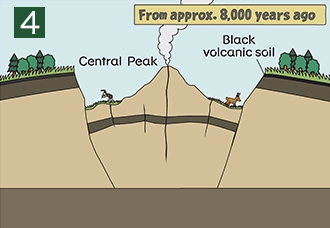
Over time, part of the caldera wall eroded and collapsed, draining the lake and creating a vast plain. People then began to settle within the caldera.
Preserving the Grasslands
Continuing Practices
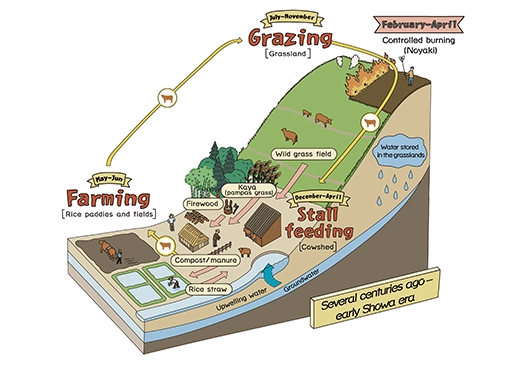
Without human intervention, Aso’s grasslands would become overgrown with trees and eventually turn into forest. It is thought that the early settlers of this area maintained the grasslands and used the wild grasses growing there for agriculture and livestock raising.
Furthermore, the Engishiki*, a legal code written approximately 1,100 years ago, contains descriptions of Aso’s grasslands being used as “maki” (grazing land), showing that people living in Aso from at least the 9th century were already making use of and valuing the grasslands.
Today, however, Japan’s population is declining and lifestyles have changed dramatically, causing the extent of Aso’s grasslands to shrink year by year. Maintaining grasslands requires large numbers of people, and local communities are actively working together to find ways to preserve them.
*The Engishiki (Regulations of the Engi Era) is a 50-volume legal code completed in 927 during the mid-Heian period, compiling detailed procedural rules for government administration. It is the most important primary source for ancient history research, recording in detail state ceremonies, administration, and Shinto rituals.
Grassland benefits and functions
Sometimes, nature can only be maintained through human involvement.
Untouched nature is beautiful in its own right. But just as an unmanaged forest can amplify damage from natural disasters, there are cases in which balance can only be preserved through appropriate human stewardship. The Aso grasslands offer an opportunity to witness up close the benefits born from this collaboration between people and nature.
Water retention capacity
Nurturing Kyushu’s Water Sources
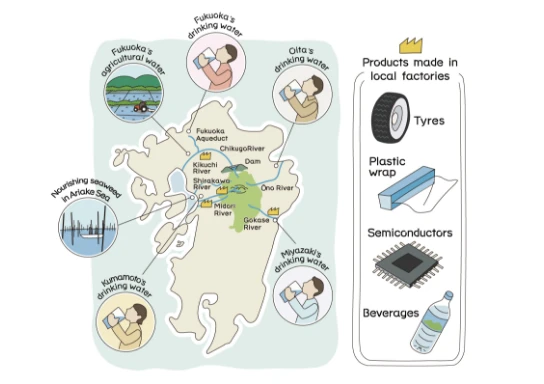
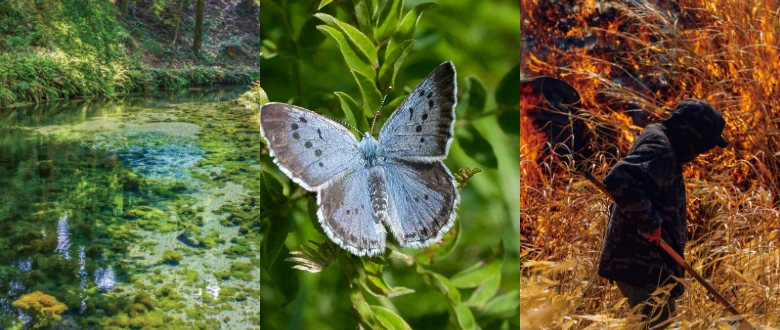
Aso’s grasslands receive more than twice the national average annual rainfall. The vast carpet of wild grass slows the flow of rainwater and allows huge quantities to soak into the volcanic soil below. This rainwater percolates through the ground of the Aso Five Peaks and Outer Rim Mountains over 20–30 years before emerging from more than 1,500 known spring sites and flowing into six major rivers across Kyushu. It is used as agricultural and drinking water, supporting the livelihoods of approximately 5 million people living in these river basins.
What is the water retention capacity of Aso’s grasslands?
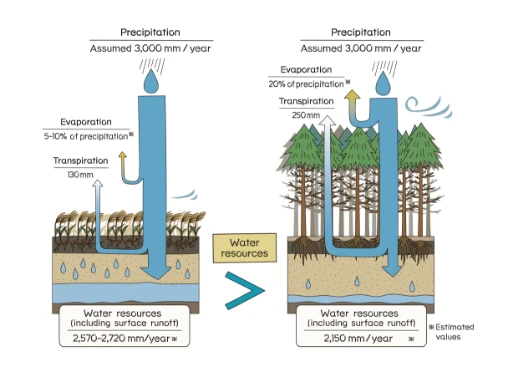
Grasslands and forests store rainwater within the soil and release it slowly into rivers, preventing large volumes of water from being discharged all at once during heavy rain and maintaining a steady slow release even during dry periods. This function is called “water retention capacity.”
Recent research in the Aso region has shown that the annual transpiration of grassland plants (meaning the process by which water absorbed through roots is released as water vapor into the atmosphere) such as susuki (pampas grass), is approximately 130 mm. This is lower than that of Japanese cedar and cypress forests, which reaches about 250 mm. Research has also shown that interception evaporation (rainwater that hits leaves and branches and evaporates directly) is lower in grasslands than in forests.
These results suggest that Aso’s grasslands possess an excellent water retention capacity.
Biodiversity
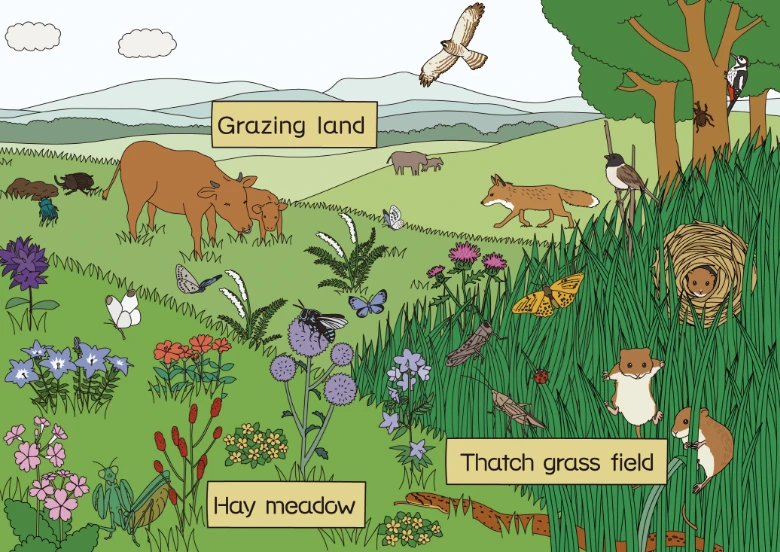
Aso’s grasslands are an important habitat for many animals and plants; of approximately 1,600 plant species found in the area, about 600 grow in the grasslands. These grasslands form the foundation of a rich ecosystem inhabited by rare butterflies, bird species, and mammals.
For example, the Large Shijimi Blue butterfly(Shijimiaeoides divinus asonis) feeds on wild grassland plants (Sophora flavescens), while the Daikoku-kogane horned dung beetle(Copris ochu) feeds on the droppings of animals living in the grasslands. Grassland bird species such as the Japanese reed bunting (Emberiza schoeniclus) come in search of these insects and wild grass seeds.
The grasslands, shaped by the interactions of diverse animals and plants, not only provide us with beautiful scenery and recreational space, but also serve as local resources in the form of mountain edible plants, ceremonial flowers, and green manure for farming.

Ōrurishijimi (Large Shijimi Blue butterfly, Shijimiaeoides divinus asonis)

Ouraginhyomon (Nerippe Fritillary, Fabriciana nerippe)

Higotai (Globe Thistle, Echinops setifer)
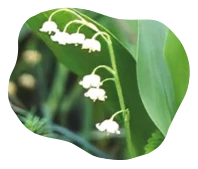
Suzuran (Lily of the Valley, Convallaria majalis var. manshurica)
The Concept of “Nature Positive”
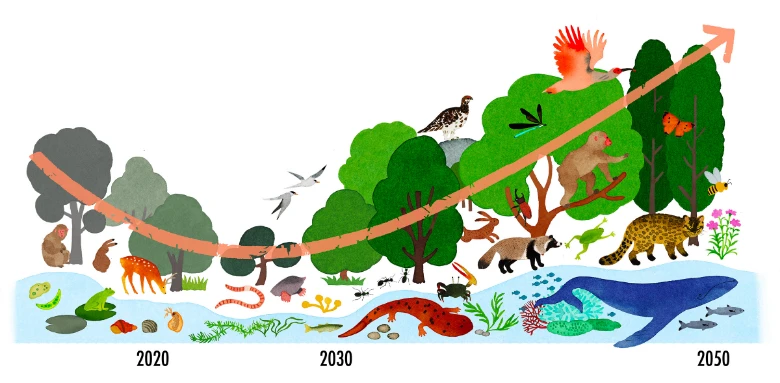
This refers to halting the negative (loss) trend in biodiversity and reversing it toward positive (recovery). The loss of biodiversity is caused by a variety of factors: development, overexploitation and illegal harvesting, the abandonment of rural landscape management, the introduction of non-native species, water pollution, and the progression of global warming. While these direct factors often receive the most attention, they are rooted in broader socio-economic changes. For example, shifts in industrial structure and the decline of agriculture and forestry have led to the abandonment of rural landscape management, while the advancement of globalization has increased reliance on imported food and timber, resulting in lower domestic self-sufficiency and contributing to problems related to non-native species.
For more details, visit the Ministry of the
Environment "Nature Positive Portal" website.
Disaster Prevention and Mitigation
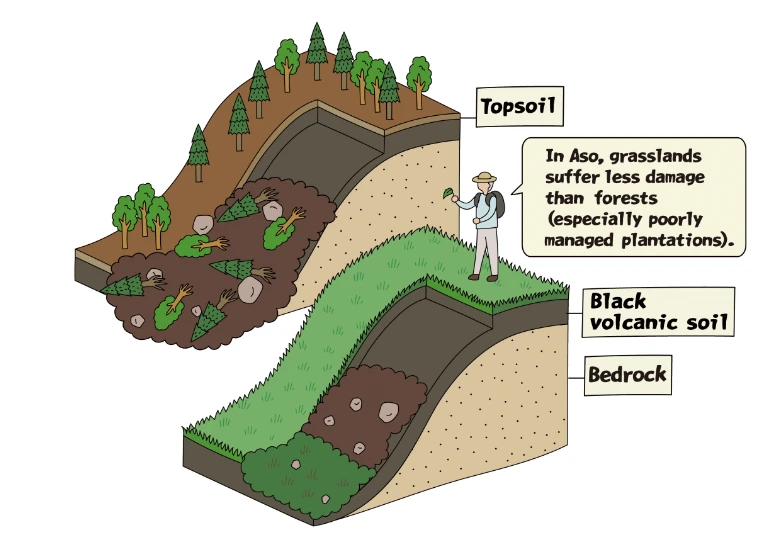
The Aso region has a geological structure in which thick layers of volcanic ash have accumulated on top of bedrock. When exposed to heavy rainfall or major earthquakes, slope failures caused by the movement of surface volcanic ash soils are frequently observed. When such collapses occur in grassland areas, the volume of displaced soil is smaller than in forested areas, helping to reduce damage. In addition, grasslands recover quickly and play an important role in preventing soil erosion and the recurrence of slope failures.
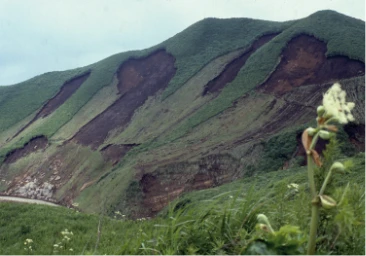
Scene from the July 1990 heavy rain disaster
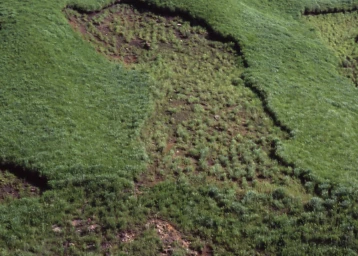
5 years later
Carbon Sequestration
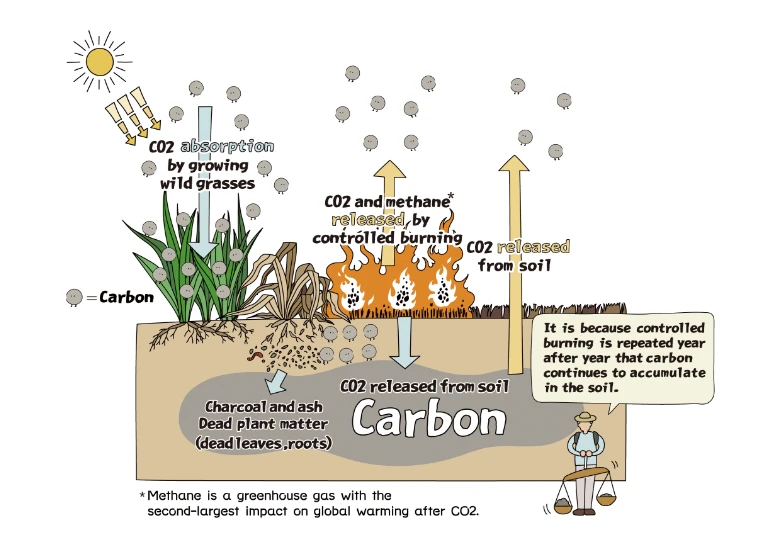
Aso’s grasslands continue to accumulate carbon beneath them. This is because charcoal remaining after controlled burns, decomposed roots and other parts of wild grasses, are stored in the soil as organic matter containing carbon. The carbon accumulation rate in Aso’s wild grass fields is said to be 6.9 tonnes per hectare per year; calculated across the whole of Aso, this equates to sequestering the annual CO2 emissions of approximately 35,000 households every year. From the perspective of preventing global warming, Aso’s grasslands make a major contribution.
The Grasslands in Crisis
Today, Japan’s population is declining and lifestyles have changed dramatically, causing the extent of Aso’s grasslands to shrink year by year. Maintaining grasslands requires large numbers of people, and local communities are actively working together to find ways to preserve them.
Changing Lifestyles
and Grassland Management
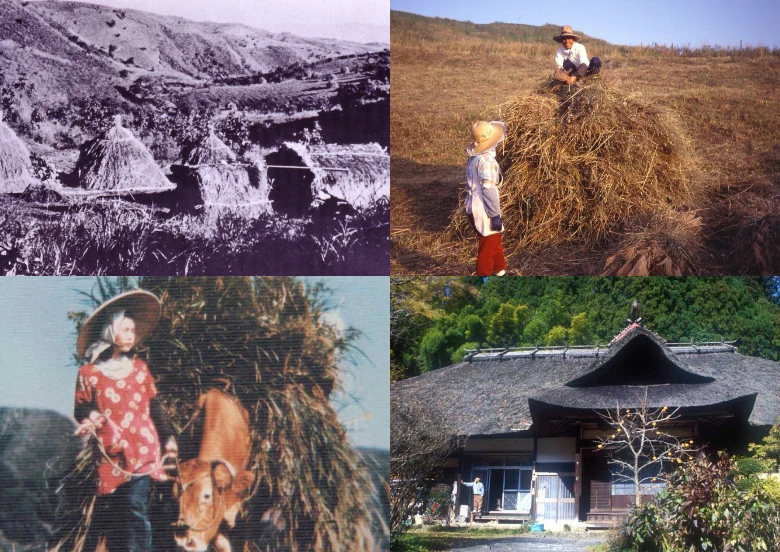
Aso’s grasslands have long been used as pastureland for horses and cattle used in farming. Wild grasses were also indispensable to local residents in many aspects of daily life, used as thatching material for roofs, as fuel for heating, and for other purposes. Today, however, changes in lifestyle mean that fewer people use wild grasses as everyday materials and tools. Furthermore, horses and cattle for farm work have been replaced by tractors and other machines, and the number of people engaged in livestock farming using the grasslands as pasture has declined sharply, greatly reducing the opportunities to use the grasslands. As a result, the extent of the grasslands has shrunk to less than half what it was 100 years ago, and continues to decrease.
 Shrinking Grasslands
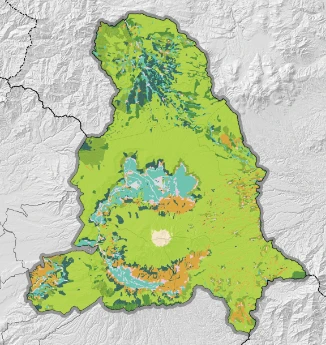
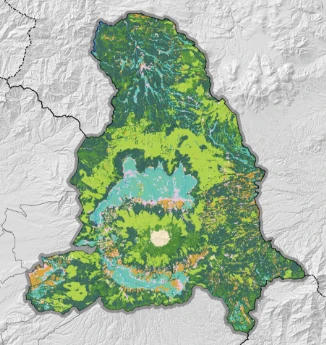

In this map, the yellow-green areas represent grasslands and the dark green areas represent forests. It shows how much grassland has been lost over the past 100 years.
* Photo provided by: Aso World Cultural Heritage Promotion Office
Using the Grasslands
The grasslands form beautiful landscapes and have been extensively used in local ways of life, agriculture, and other industries. Here we introduce some of the ways the grasslands are uniquely used in the Aso region.
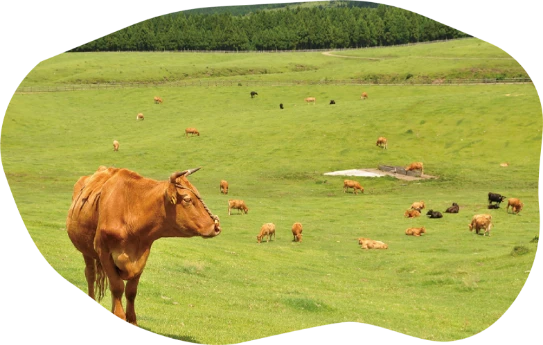
Cattle Grazing
Cattle are put out to graze on Aso’s grasslands every year from April to December. During winter, when the wild grasses wither, they are brought back to stables near residential areas and raised indoors.
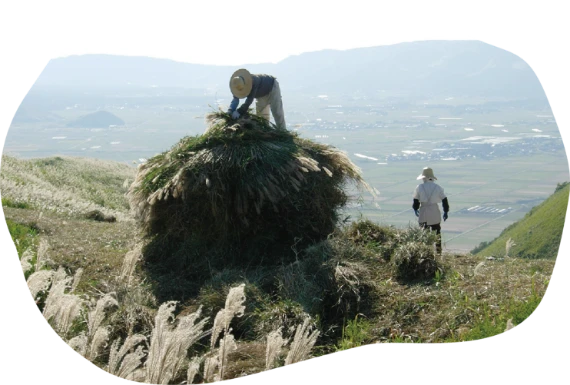
Harvesting Wild Grass
(A description of the traditional haystacking process)
A traditional method of preserving grass, which was used as feed for cattle and horses during winter. Nowadays, the grass is dried in the sun and then rolled up for storage.
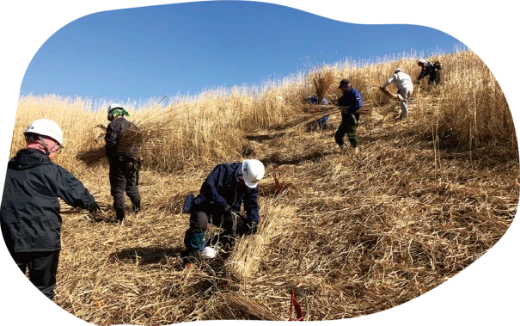
Harvesting Thatch
Dried winter grasses are harvested as replacement thatching material for traditional buildings such as cultural properties. The harvest of thatch is expected to create new opportunities for grassland use and generate new businesses.
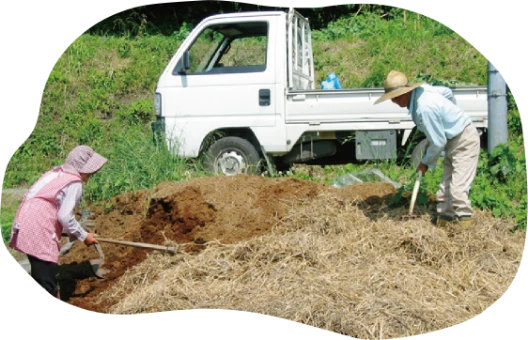
Making Wild Grass Compost
Experience the thrill of running through breathtaking grasslands normally off-limits to the public! Various events are held throughout the year across the beautiful landscapes of Aso.
What We Can Do to Protect Aso’s
Grasslands
Currently, Japan’s population is declining, lifestyles are changing dramatically, and the area of Aso’s grasslands is shrinking year by year. Maintaining the grasslands requires a lot of manpower, so local people are actively working to find ways to preserve the grasslands.
Grasslands and
Local Livelihoods in Crisis
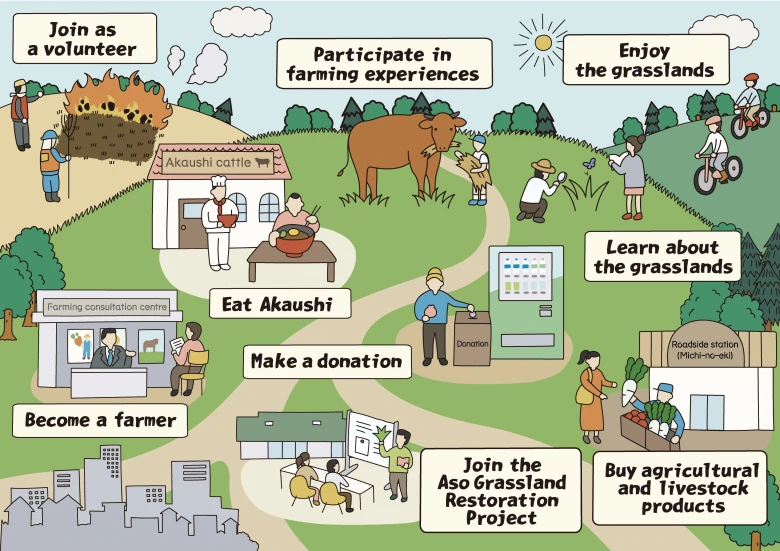
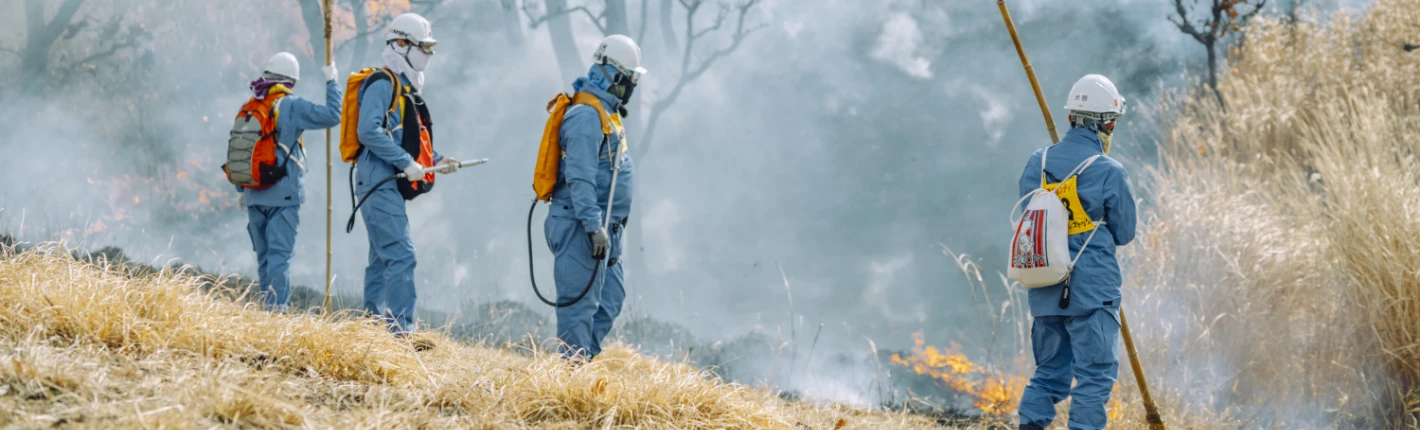
While Aso’s grasslands continue to decrease, local efforts to maintain and restore them are growing. Volunteer activities in controlled burning, firebreak cutting, wild grass harvesting, and wildlife conservation are gaining momentum, and now play a major role in the maintenance and restoration of Aso’s grasslands. Why not take part in these volunteer activities?
Various new businesses that contribute to grassland maintenance and restoration are also being explored. For example, by joining cycling or other activity tours organised by certified guides known as “Bokuya Guides” (Private grassland Guides), part of the tour fee is returned to fund grassland maintenance costs. When visiting Aso, look for ways to enjoy yourself while contributing to grassland maintenance and restoration.




What You Can Do to Maintain and Restore the Grasslands
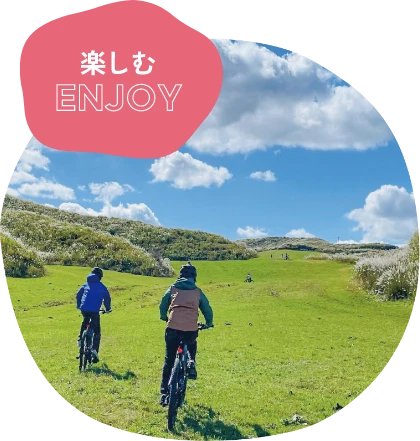
Bokuya Guide
(Grassland Activities)
Trekking, trail running, mountain biking, horseback riding… There are a variety of activities available to fully experience the charm of the Aso grasslands. Along with the fee, we also collect a “grassland conservation fee,” allowing you to contribute to the maintenance of the grasslands while having fun.
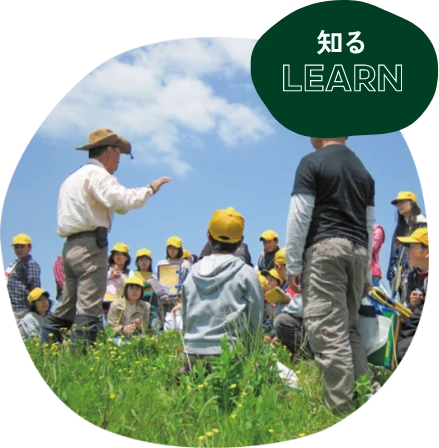
Grassland Learning
It is essential for the next generation to understand the importance of the Aso Grasslands in order to maintain and restore them.We hold workshops, hands-on activities, and exhibitions for local children to learn about the grasslands.

Eat Local Products
Enjoying delicious local specialities unique to Aso, such as Akaushi beef, dairy products and vegetables, also contributes to the regeneration of the grasslands.
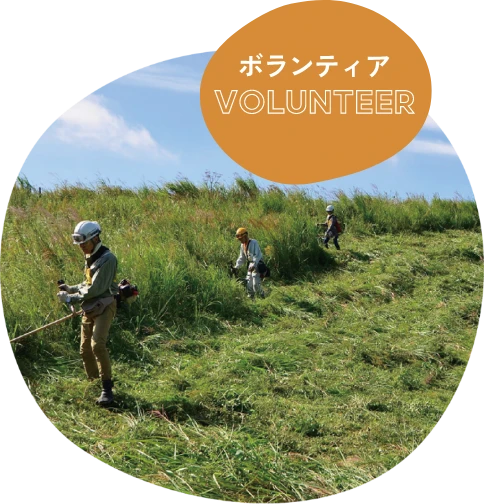
Firebreak Cutting
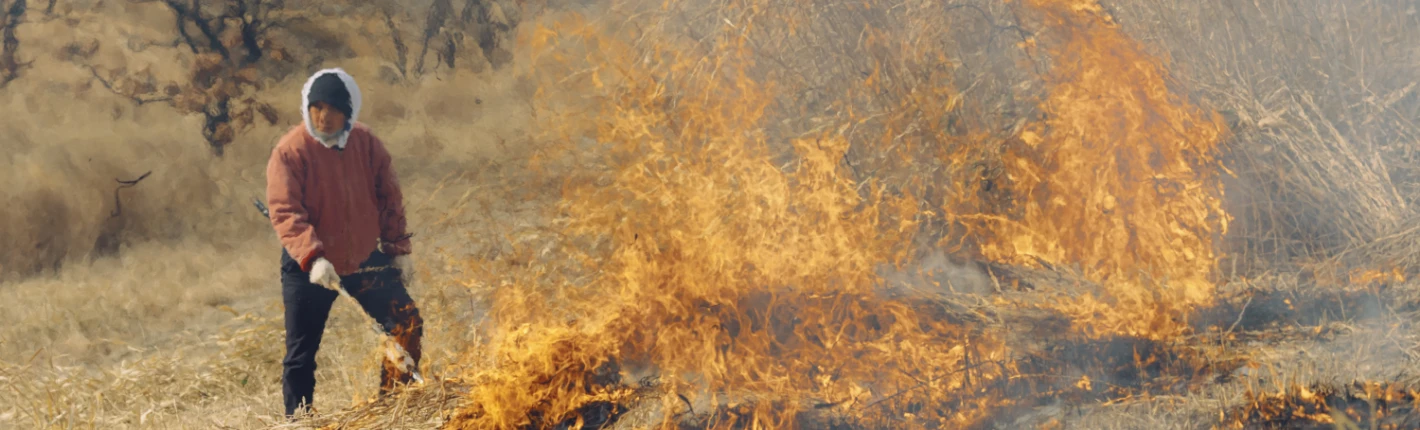
Firebreak cutting refers to the creation of firebreaks between September and November to control the spread of fire during spring controlled burning. Wild grasses are cut short along the boundary between grasslands and forests or along management boundaries, forming long, narrow firebreaks. This practice helps prevent the uncontrolled spread of fire during controlled burning.
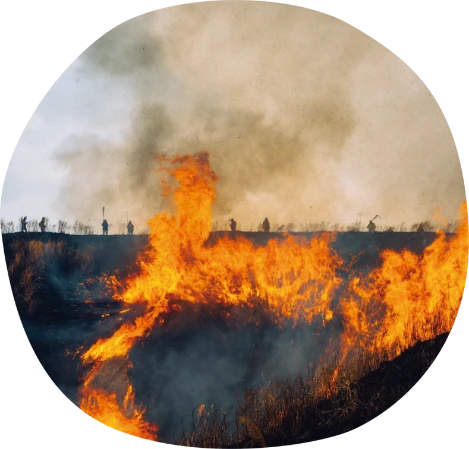
Noyaki (Controlled Burning)
The Aso Noyaki conducted around March each year is carried out with the utmost attention to the safety of the workers and the surrounding area. Through this controlled burning, the growth of shrubs and trees in the grasslands is prevented, pests are eliminated, and new growth is encouraged. Once burning is complete, new shoots of grasses and flowers quickly emerge from the scorched ground, turning the grasslands green once again.
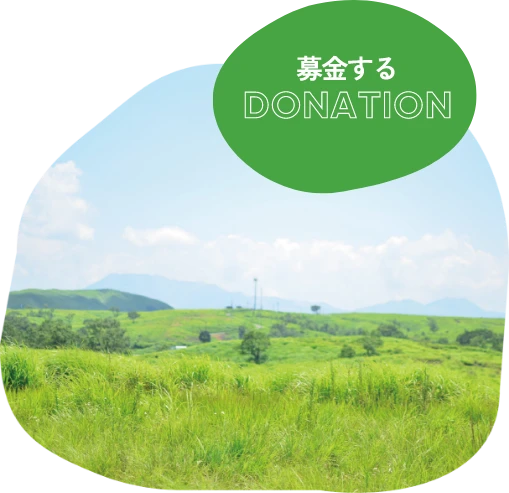
Make a Donation
Donations are a form of support you can offer even from far away. Donations collected are used to support a variety of activities related to grassland restoration.
Aso-Kuju
National Park
The scent of Grasslands, the breath of volcanoes. The blessing of the wind and water, connected by people, a land of wonder
Aso-Kuju National Park is one of Kyushu’s premier natural areas, featuring vast grasslands and wetlands centered around a group of volcanoes, including Mount Aso, home to one of the world’s largest calderas, as well as the Kuju Mountains, Mount Yufu, and Mount Tsurumi. The spectacular scenery, shaped by volcanic forces, pastoral grasslands, and a rich and diverse ecosystem, changes its character with each season and offers a wide range of experiences, including hiking, leisurely walks, and hot springs.
Pamphlet
We also have a pamphlet outlining the details, which you can check here.
link

Aso Grassland Conservation Activity Centre

Aso Grassland Restoration Donation Fund Guide
(Aso Grassland Restoration Association)

Controlled Burning Volunteer Programme Guide
(Aso Green Stock)

Aso Grassland Restoration Project